
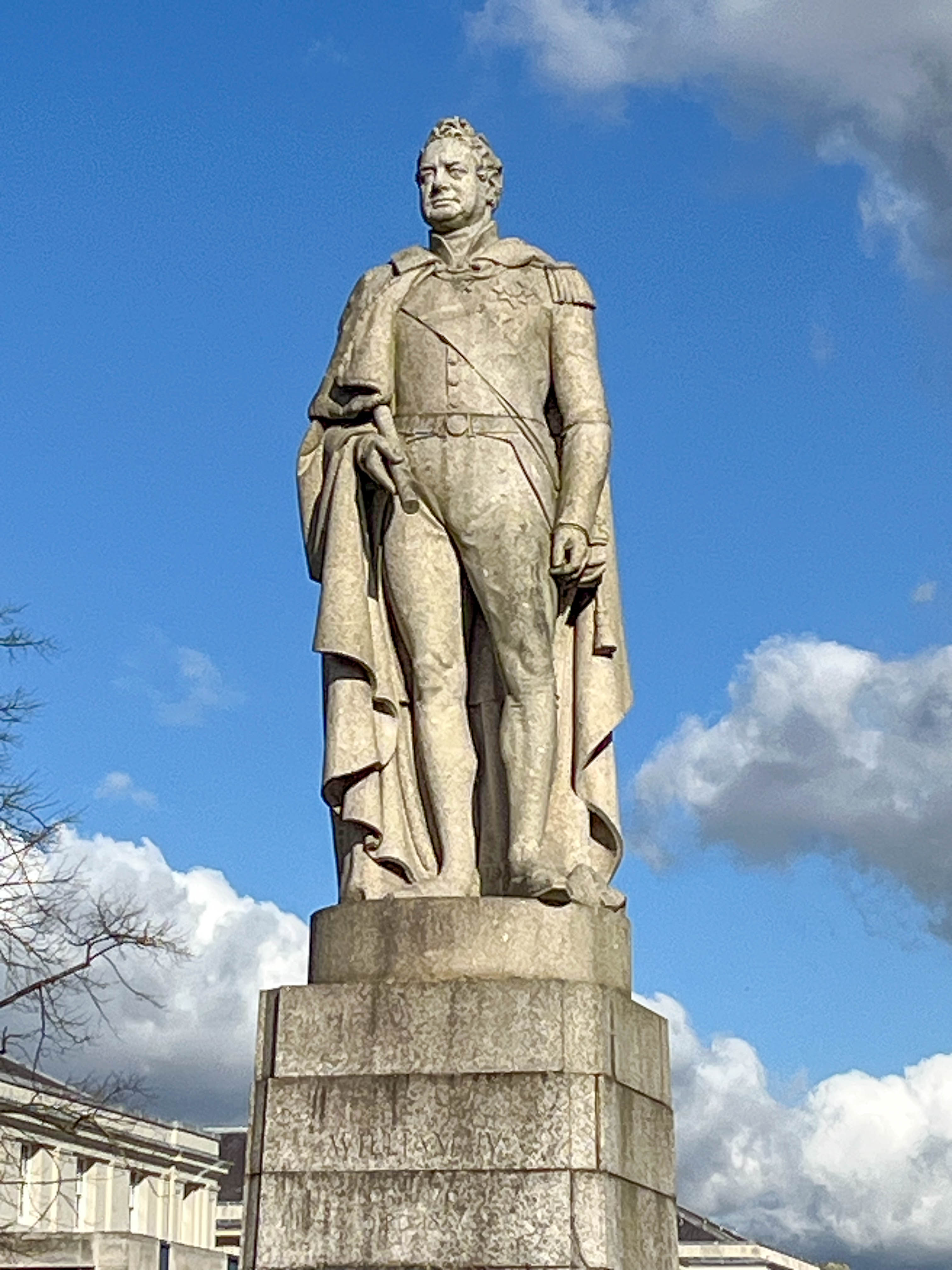
This statue, carved in 1840s by Samuel Nixon, was originally located in King William Street in the City of London. However in 1936 it was moved to its present site on the approach to the National Maritime Museum in Greenwich, where a garden had been laid out following the demolition of St Mary’s Chapel that same year.
William, Duke of Clarence, was the third son of George III and joined the Navy rising through the ranks to become an Admiral of the Fleet in 1811, although despite his wish to return to active service he had been assigned an active command after 1790. As Duke of Clarence he spent much of his time in the House of Lords. He opposed the penal laws and argued for more religious freedoms. He also opposed proposed laws that would bar those found guilty of adultery from remarrying. He was an opponent of the banning of slavery in the West Indies arguing that such freedom would not be beneficial for the slaves. On the death of his brother, George IV, he became King in 1830 at the age of 64. He had a strong connection with Greenwich, both through his naval career and being instrumental in the remodelling of some of the buildings which now form part of the National Maritime Museum. He died in 1837.


 Pete's Favourite Things