

Today’s pictures are of the dumbbell nebula (M27/NGC6853). It is a planetary nebula found in the constellation Velpecula. Like most nebula it consists of dust and gas surrounding a central core. In the case of the dumbbell nebula there is a central star, a white dwarf -the largest known of its kind. The nebula was first described by Charles Messier in 1764. It is 1200 to 1400 light years from Earth, but its brightness it means it is easily visible with binoculars or a small telescope.

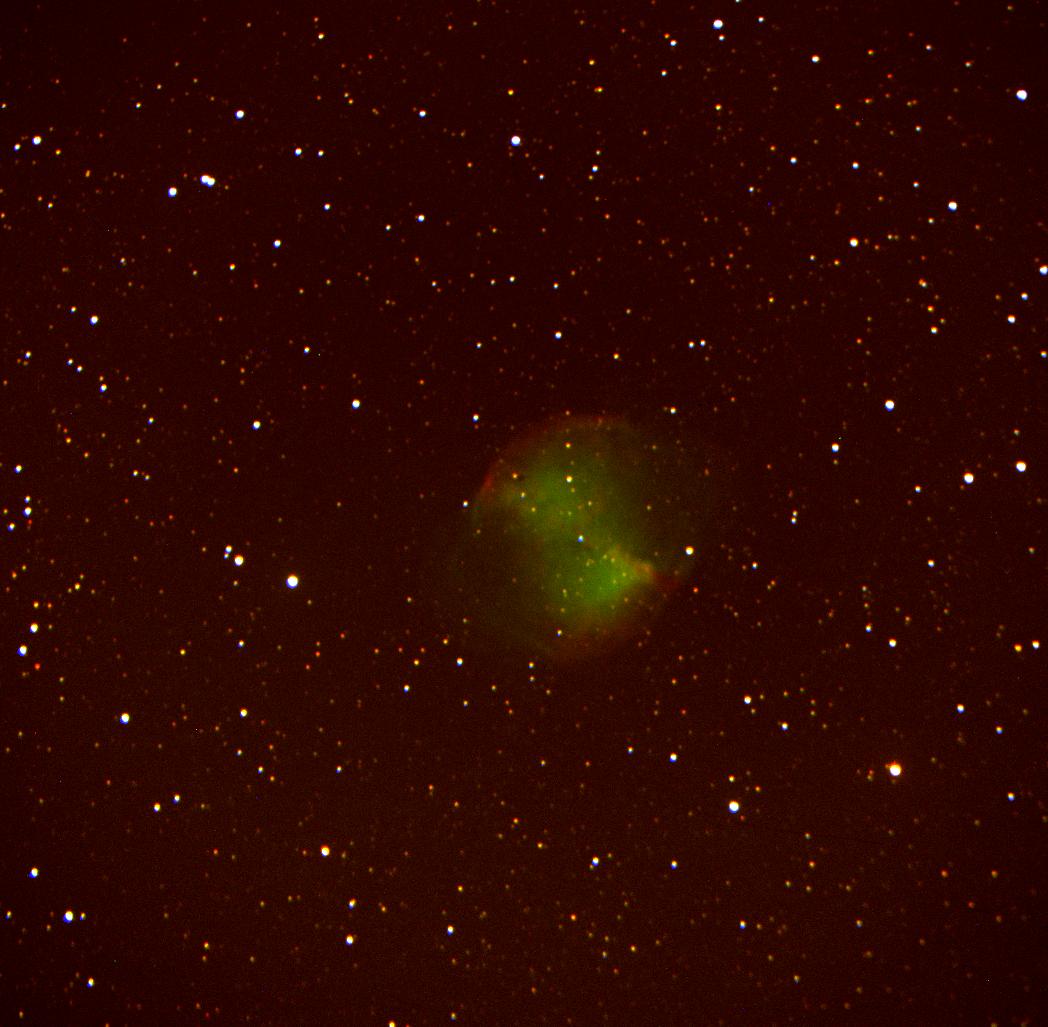
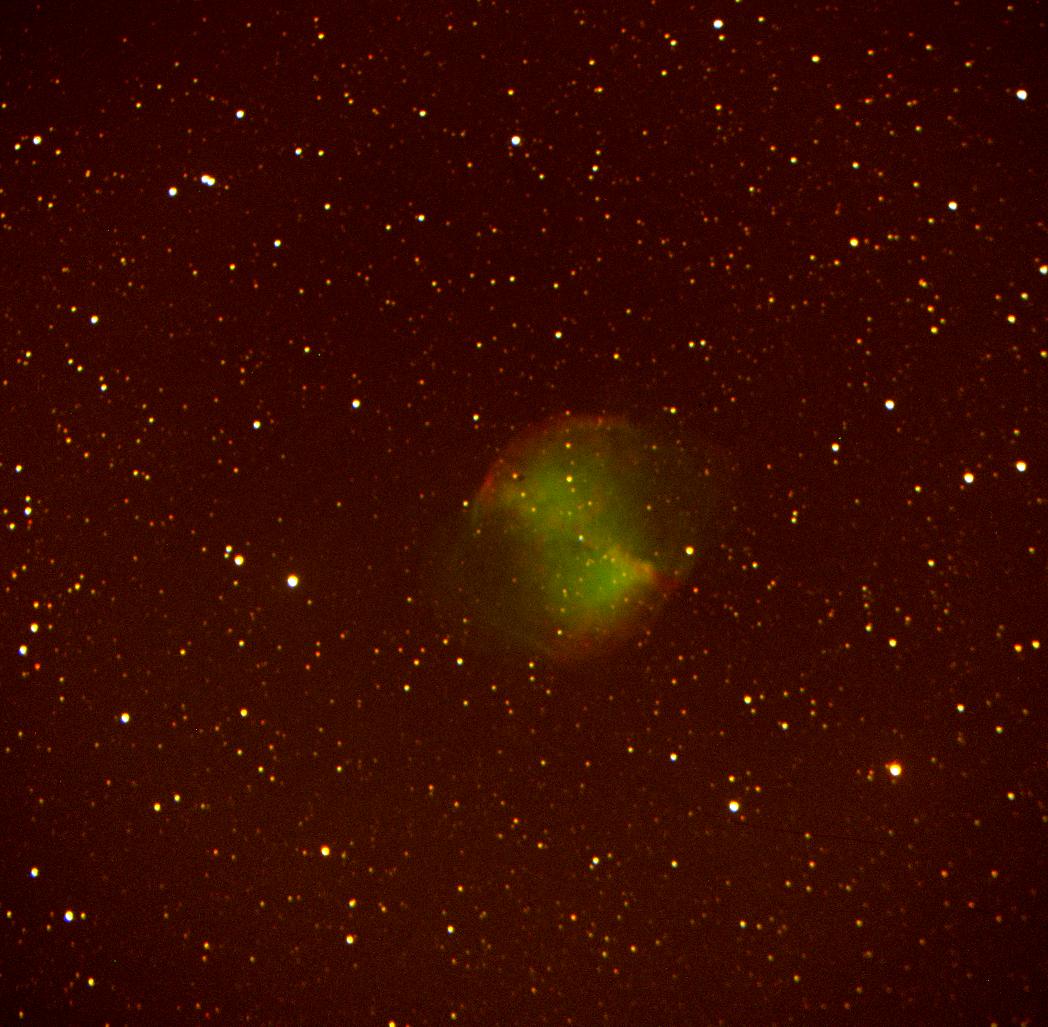
Taken with Bradford robotic telescope
Planetary nebulae are formed in the dying stages of a star when the core fusion reactions decline to the extent that the star’s structure cannot be supported – gravity forces the outer part of the star to collapse inwards, causing the inner part to condense and heat up. The intense build up of pressure and radiation causes the outer shell to ‘explode’ and be driven away. The intense stellar wind causes the surrounding gases to ionize in bright colours. (Taken from astrocruise.com)

 Pete's Favourite Things