

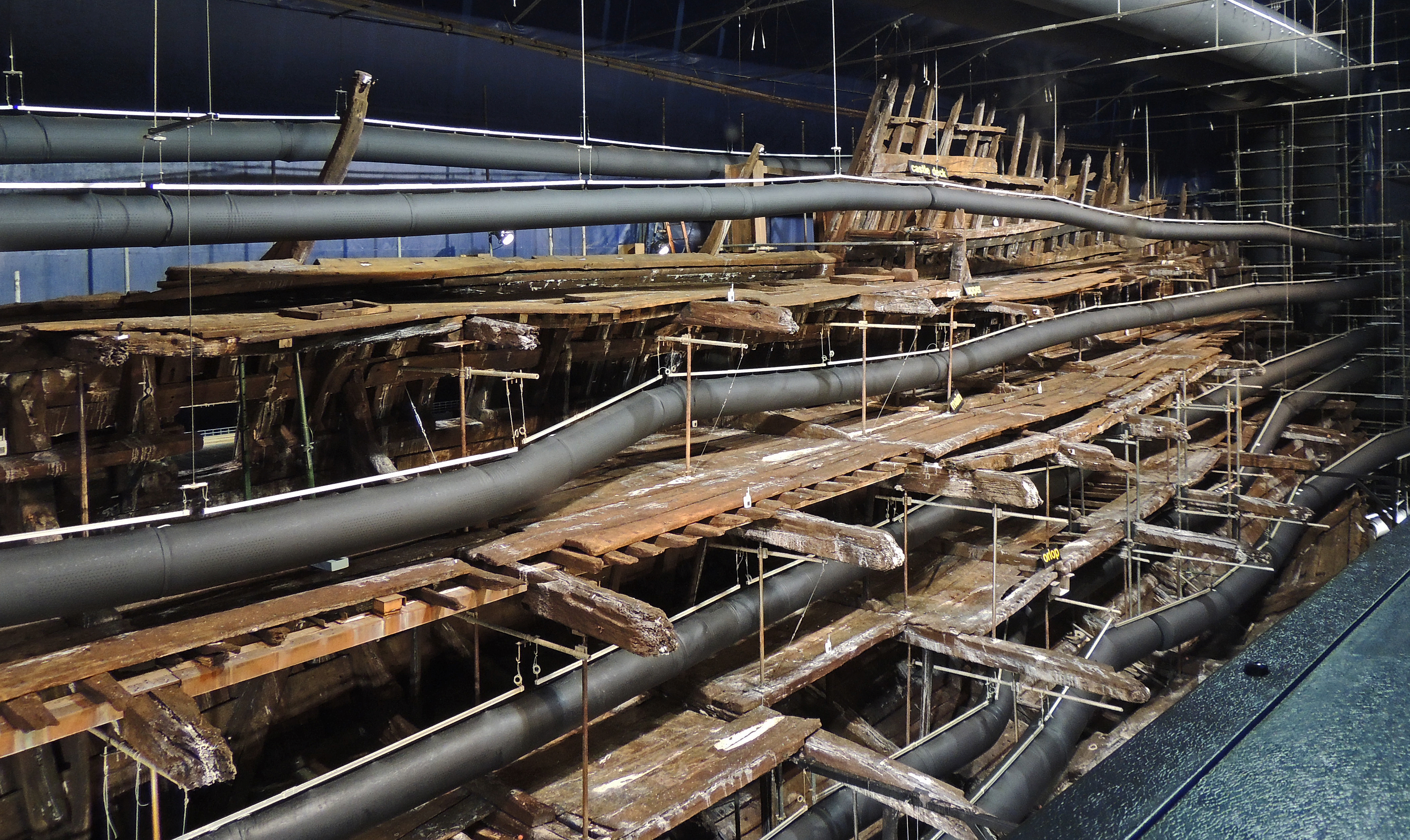
The preservation of the ship and its contents are been a major undertaking. Essentially the archaeologists were working with little real experience of preserving such a large boat. The Vasa, a Swedish warship of about 100 years later had been raised from the Baltic in 1961, but the environmental conditions found in the Baltic were very different to those in which the Mary Rose had lain in the Solent,

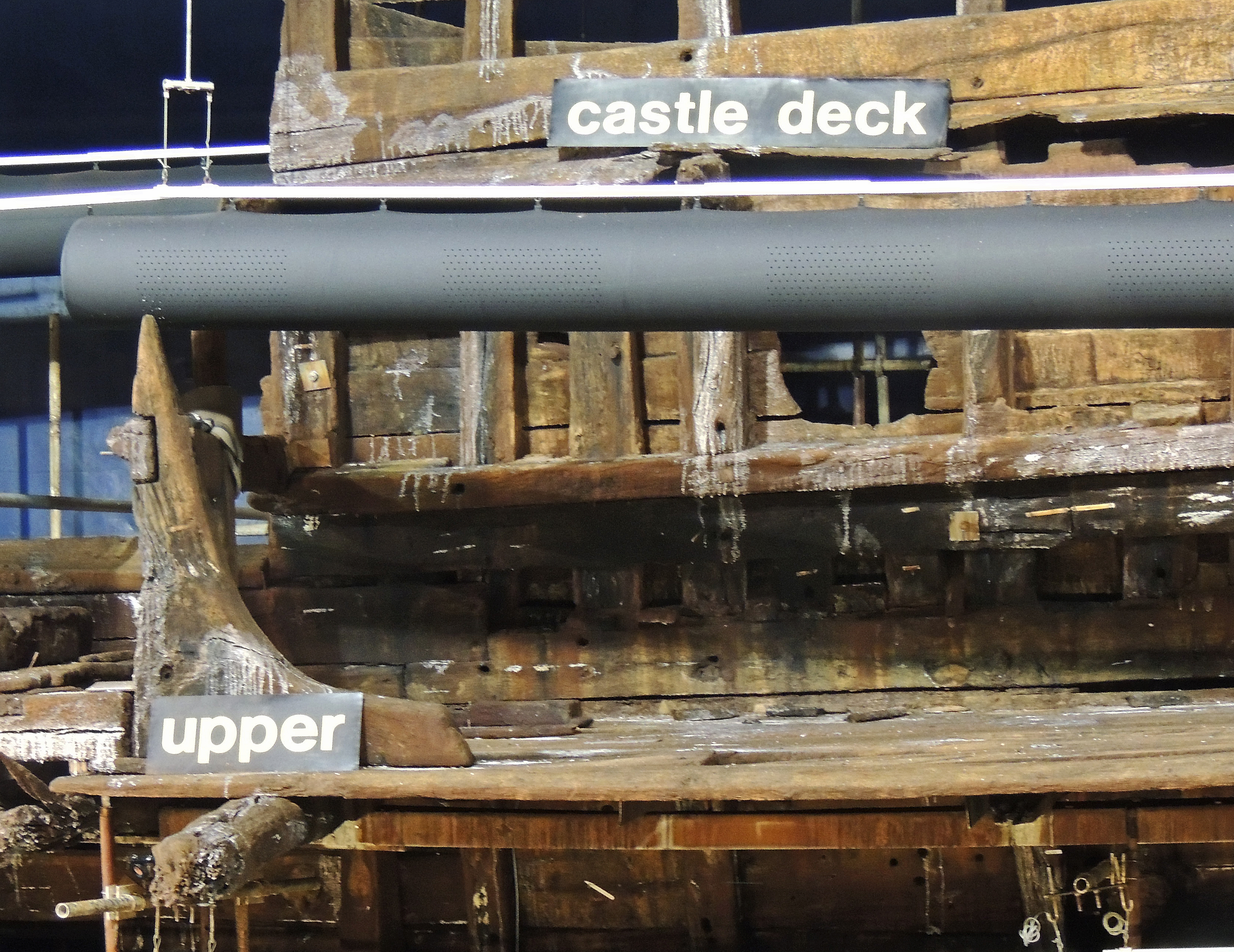
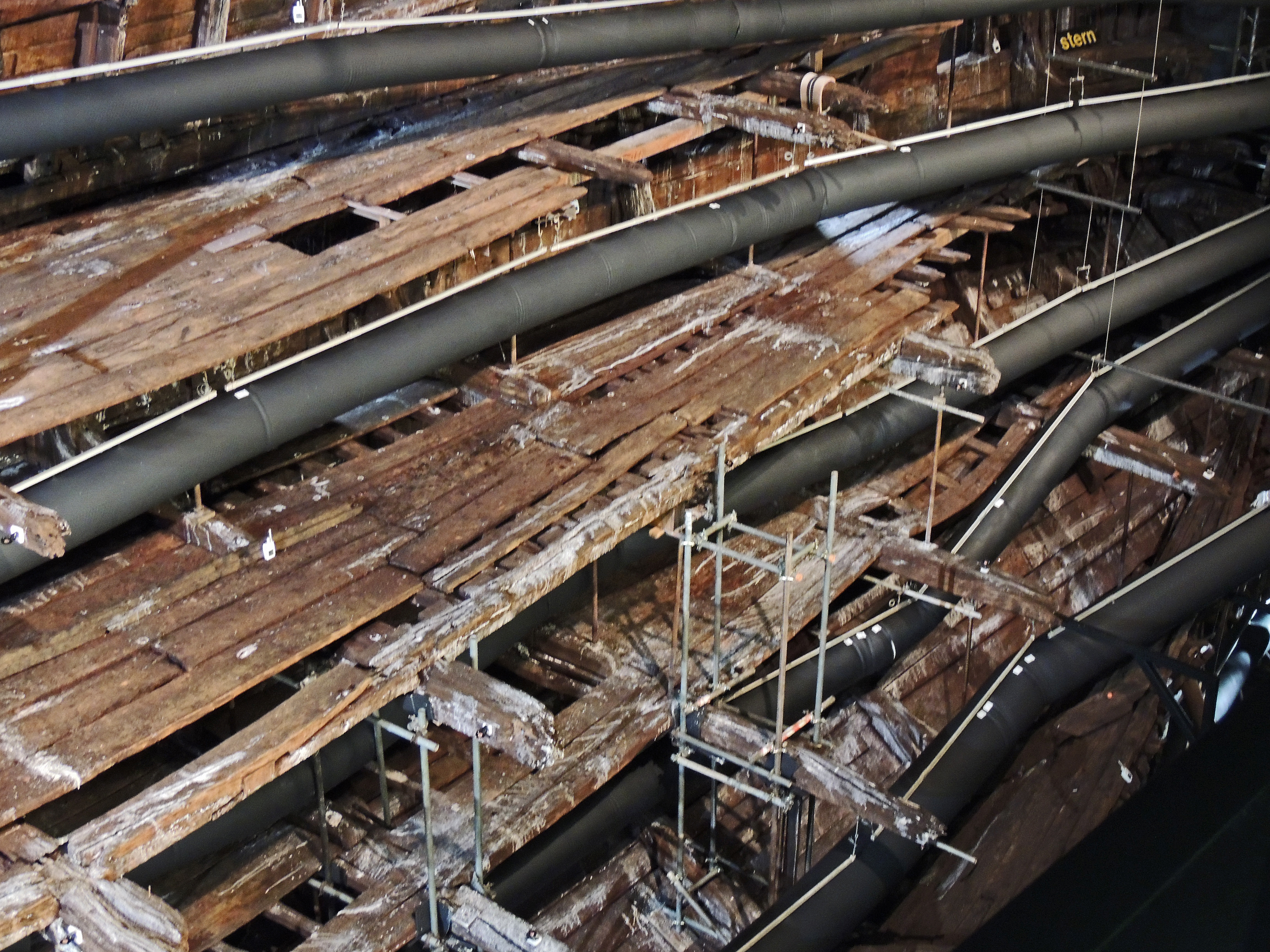
Initially, the state of the whole structure was maintained by spraying it with water at a temperature of 4° to prevent the timbers drying out. In the meantime, the archaeological team experimented on small pieces of the timber to find a more permanent solution to the problem. Eventually they decided to use sequential spraying of two different formulations of the chemical polyethylene glycol, which had also been used in the conservation of the Vasa. This chemical would replace the water currently in the cellular structure of the wood, and would prevent shrinkage, warping and cracking as the water was removed. The first formulation was sprayed onto the remains of the structure from 1994 until 2003, and the second formulation was then sprayed from 2003 until 2010. The third phase of the conservation involves a very controlled air drying and this is currently ongoing (large grey tubes in pictures) and current estimates are that the process will be completed sometime in 2015, when all the drying equipment will be removed, enabling visitors to see the remains of the ship much more clearly.

 Pete's Favourite Things