

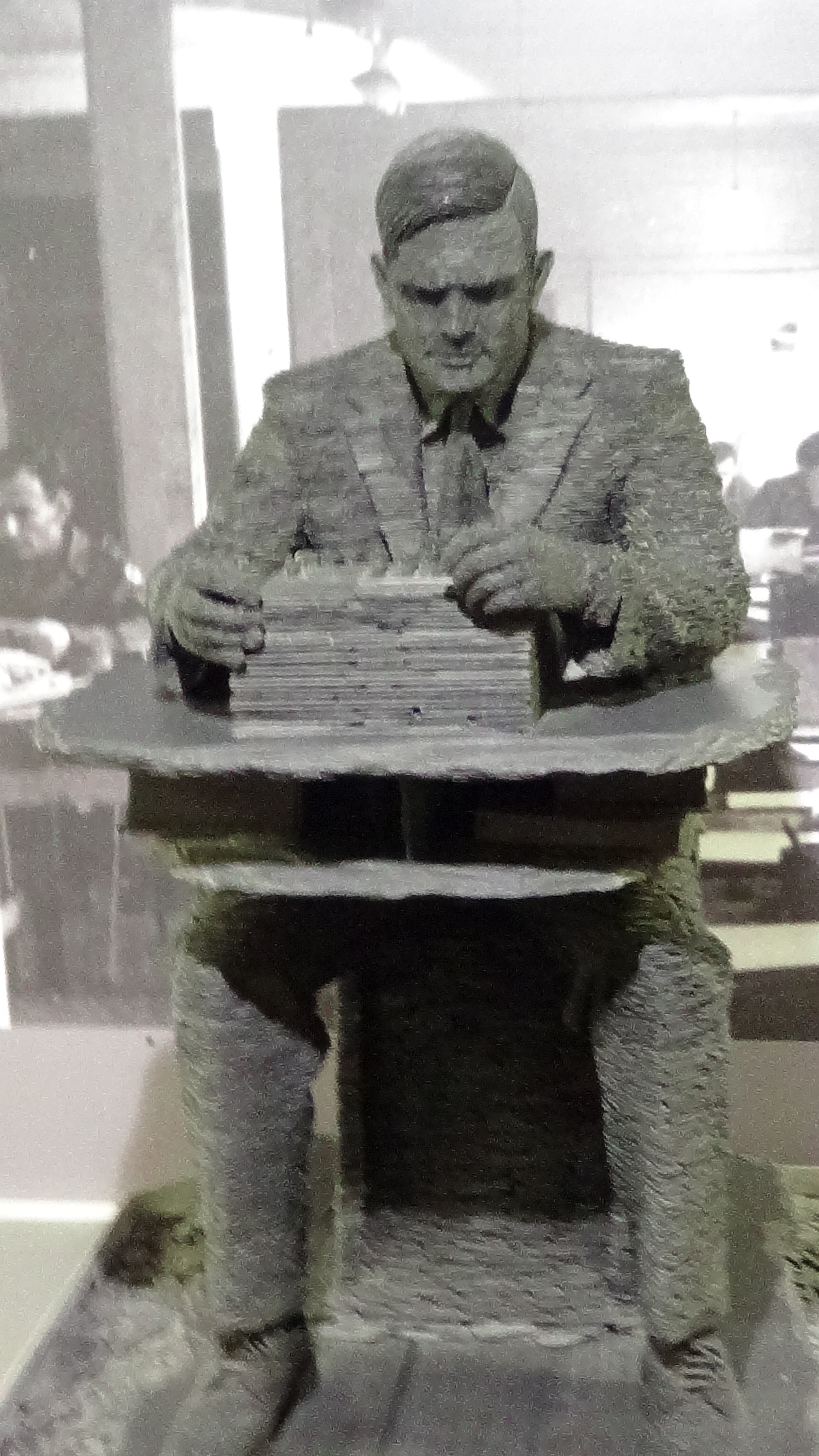
Alan Turing was born in 1923. His talent was recognised from an early age. He had a natural talent in the fields of science and mathematics although this was not always appreciated by his teachers at Sherborne, the school he attended where his headmaster commented to Turing’s parents that if he wished to continue his scientific studies he was wasting his time at the school (!). Nethertheless he continued to persue the study of the subjects that fascinated him. He went to King’s college Cambridge and gained a first class honours degree in mathematics and moved to Princeton University to continue his studies. He obtained a PhD and returned to the UK.
Turing had already done some part-time work for the government code and cypher school and had worked on the Enigma project. When war broke out Turing reported to Bletchley Park where he began work with Gordon Welchman on the development of the Bombe, a machine for obtaining the daily settings of the German Enigma machines. The first working Bombe was installed in hut 1 at Bletchley in March 1940.
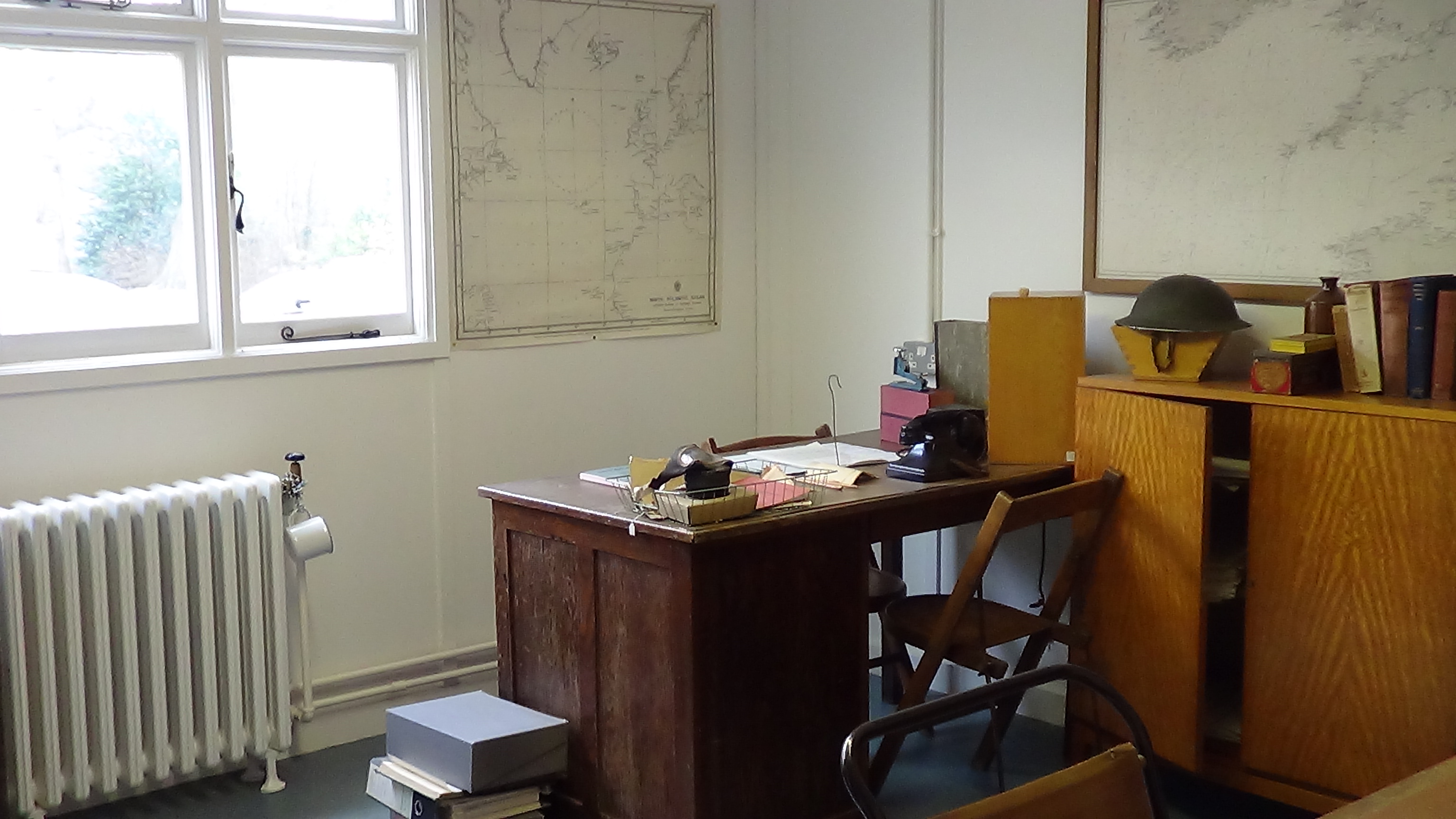
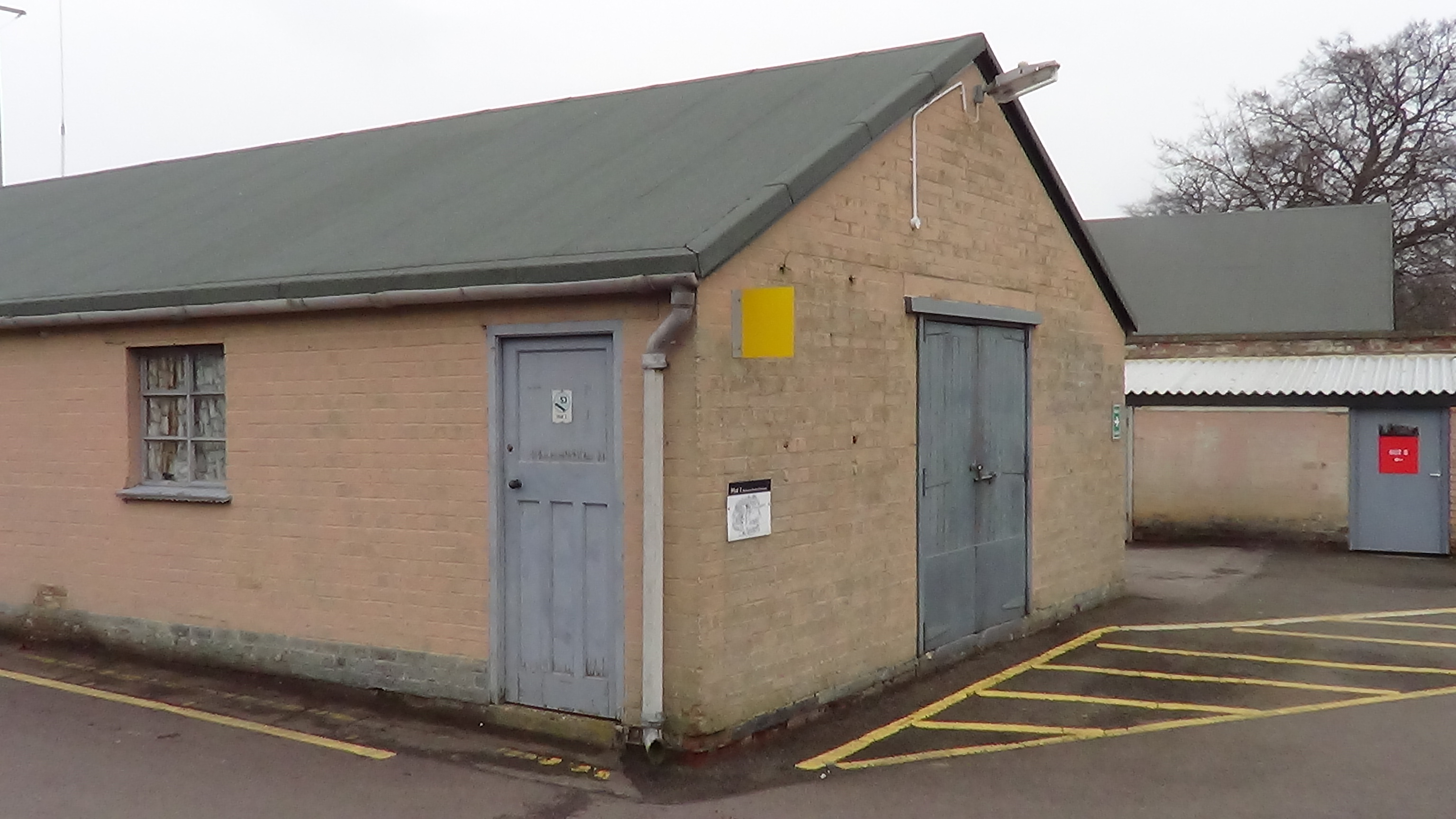
By the end of the war over 200 such Bombes would be in operation at Bletchley and at other associated stations. In 1942 he produced the Turingery, a machine for deciphering the German Lorenz coding system and also worked on Delilah, a secure speech system for the telephone.

After the war he continued to work on computers at the National Physical Laboratory and then at the University in Manchester and was one of the foremast academics in this now burgeoning field. He was awarded the OBE by King George VI for ‘wartime services’ although the nature of these services was not disclosed. In 1952 he was convicted of gross indecency as a result of his homosexuality (homosexual acts being illegal in the UK at that time). His conviction closed many doors to him particularly those in the government agencies whom he had continued to work with on a consultancy basis.
Alan Turing was found dead on 8 June 1954 as a result of cyanide poisoning. The coroner ruled it suicide although friends and family stated they believed it was an accident (a result of the experiment he was performing at home on electro-platting).
In 1999 Time magazine included Alan Turing in its ‘100 most important people of the 20th centruy’ and he was ranked 21st in a BBC poll of the ‘100 greatest Britons’. In 2009 the British government issued an apology, recognising that the treatment that Turing had received was “appaling”.
Alan Turing was 31 years old when he died. One can only wonder what else he may have achieved in his life had it not been cut short?

 Pete's Favourite Things