

At last summer seems to have arrived and off to the only RSPB reserve within the London recording area. Rainham marshes is located on the eastern edge of London beside the Thames. The land was previously a military shooting range but has been developed over the last 10 years into one of the best nature reserves in the country.

June tends to be one of the quieter months for birds as those present are occupied in raising their young and therefore there is little movement other than in a restricted local area. My targets for today were to record Hobby within the London area and to see what dragonflies and butterflies the sun has brought out.
Like many of our birds of prey the Hobby was once a rare nesting bird in south-east England. However over the last 10 years. This situation has changed and they are now seen far more commonly in the area. I was fortunate to have three views of the bird during my visit, including one at very low level as it passed over the hide. Unfortunately, far too quickly for me to get a photograph of it.

Photo by Dave Curtis (http://www.flickr.com/photos/davethebird/)
On the dragonfly front I was able to find Blue-tailed Damselfly and Azure Damselfly. The butterflies were slightly more disappointing and the only new species seen was Small Tortoiseshell.

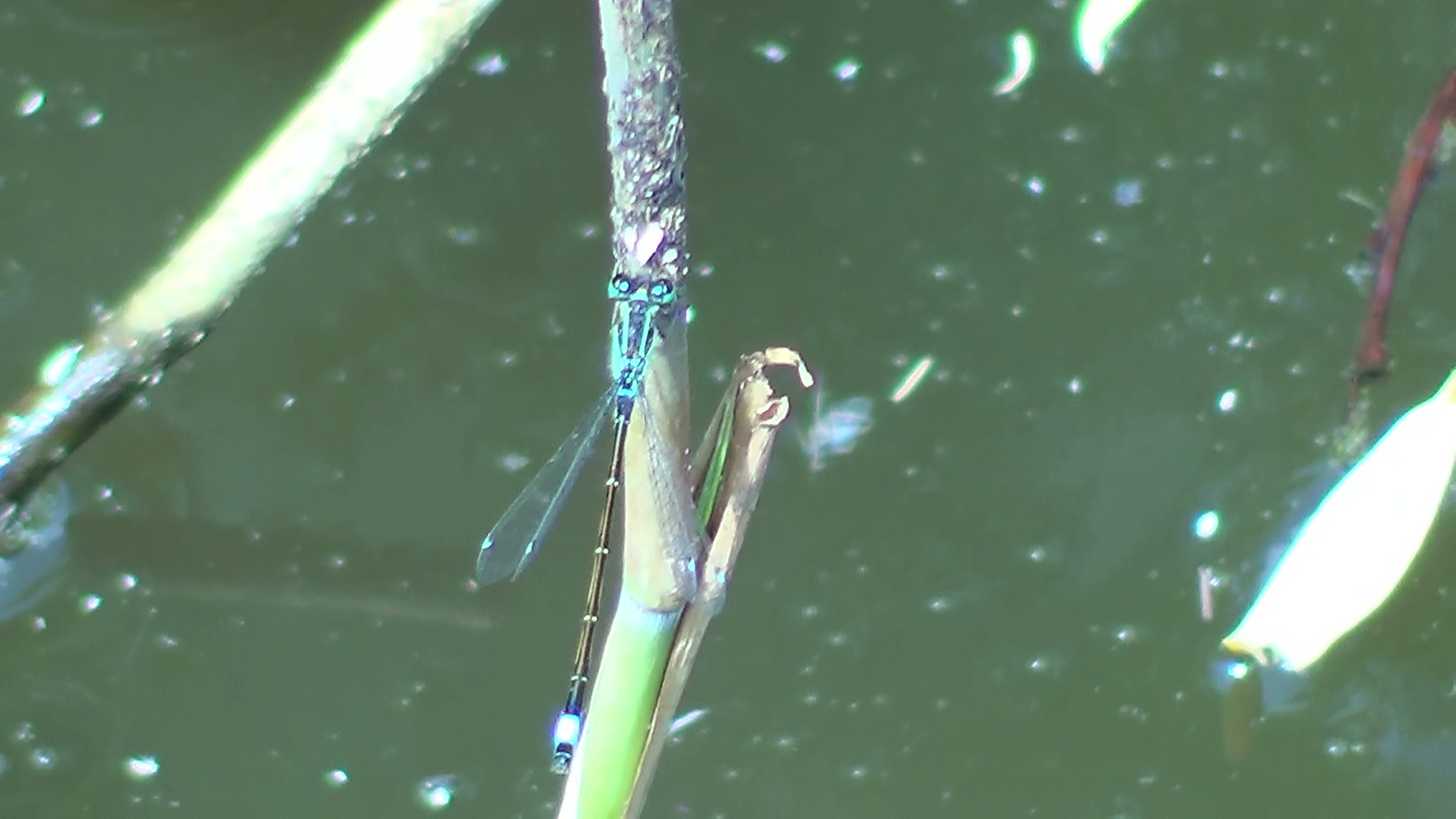
I was interested to hear that the situation of our ‘winged insects’ in the UK made national radio news this week and was in a number of the newspapers, as conservation organisations reported that the combination of last year’s poor summer together with the delayed spring this year have seriously affected butterfly and dragonfly populations.
Canada Goose [sp] (Branta canadensis)
Mute Swan (Cygnus olor)
Common Shelduck (Tadorna tadorna)
Gadwall (Anas strepera)
Mallard [sp] (Anas platyrhynchos)
Tufted Duck (Aythya fuligula)
Little Grebe [sp] (Tachybaptus ruficollis)
Grey Heron [sp] (Ardea cinerea)
Little Egret [sp] (Egretta garzetta)
Great Cormorant [sp] (Phalacrocorax carbo)
Common Kestrel [sp] (Falco tinnunculus)
Eurasian Hobby [sp] (Falco subbuteo)
Common Moorhen [sp] (Gallinula chloropus)
Eurasian Coot [sp] (Fulica atra)
Northern Lapwing (Vanellus vanellus)
Common Redshank [sp] (Tringa totanus)
Black-headed Gull (Chroicocephalus ridibundus)
European Herring Gull [sp] (Larus argentatus)
Lesser Black-backed Gull [sp] (Larus fuscus)
Common Tern [sp] (Sterna hirundo)
Common Pigeon [sp] (Columba livia)
Common Wood Pigeon [sp] (Columba palumbus)
Eurasian Collared Dove [sp] (Streptopelia decaocto)
Rose-ringed Parakeet [sp] (Psittacula krameri)
Common Swift [sp] (Apus apus)
Eurasian Jay [sp] (Garrulus glandarius)
Eurasian Magpie [sp] (Pica pica)
Carrion Crow [sp] (Corvus corone)
Great Tit [sp] (Parus major)
Eurasian Skylark [sp] (Alauda arvensis)
Sand Martin [sp] (Riparia riparia)
Barn Swallow [sp] (Hirundo rustica)
Sedge Warbler (Acrocephalus schoenobaenus)
Eurasian Reed Warbler [sp] (Acrocephalus scirpaceus)
Eurasian Blackcap [sp] (Sylvia atricapilla)
Eurasian Wren [sp] (Troglodytes troglodytes)
Common Starling [sp] (Sturnus vulgaris)
Common Blackbird [sp] (Turdus merula)
European Robin [sp] (Erithacus rubecula)
House Sparrow [sp] (Passer domesticus)
Dunnock [sp] (Prunella modularis)
European Greenfinch [sp] (Carduelis chloris)
European Goldfinch [sp] (Carduelis carduelis)
Large White (Pieris brassicae)
Small White (Artogeia rapae)
Holly Blue (Celastrina argiolus)
Small Tortoiseshell [sp] (Aglais urticae)
Blue-tailed Damselfly (Ischnura elegans)
Azure Damselfly (Coenagrion puella)

 Pete's Favourite Things