
A trip up to the city afforded me the opportunity to take a walk along the South bank of the Thames from London Bridge towards Blackfriars.
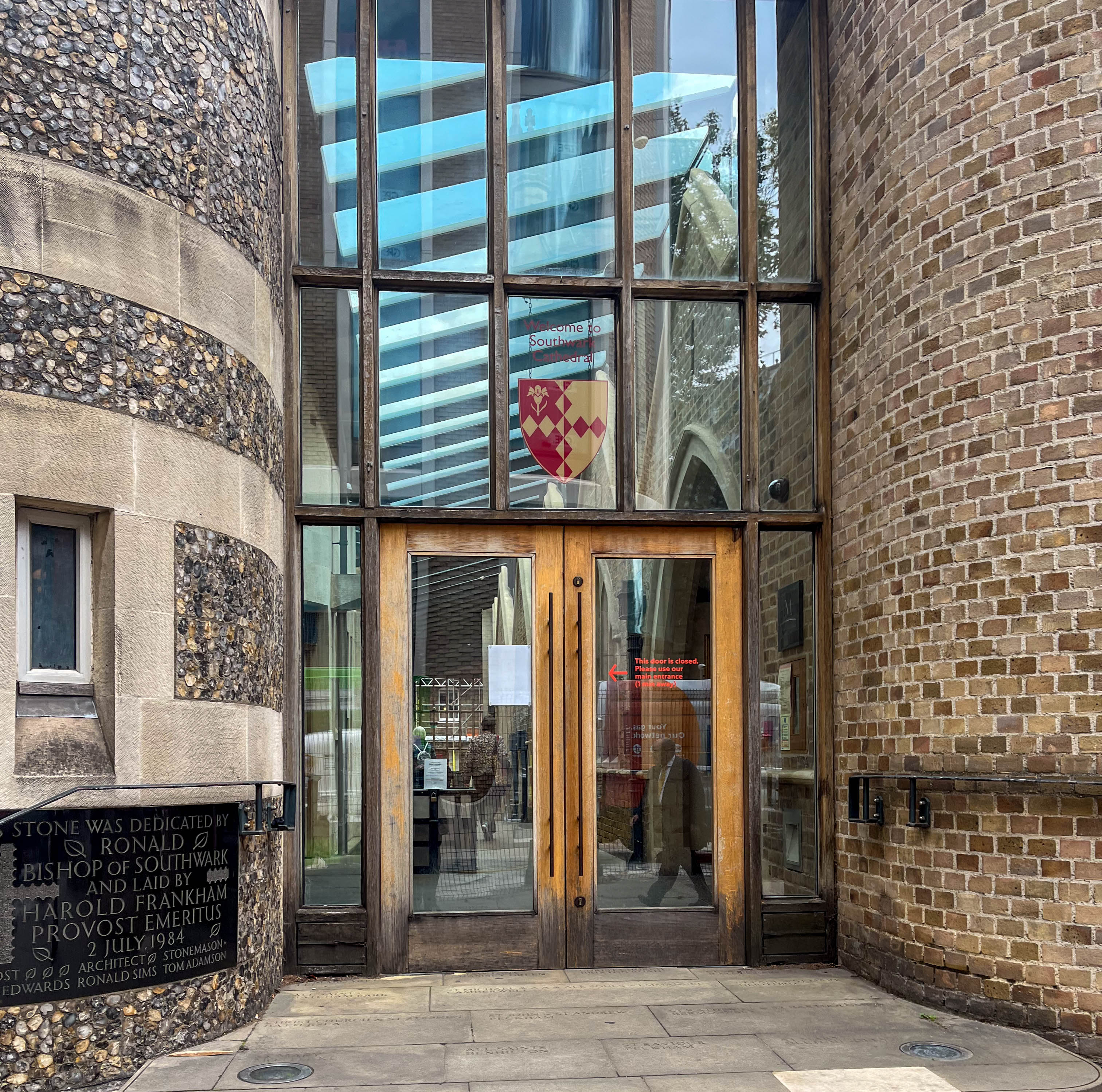
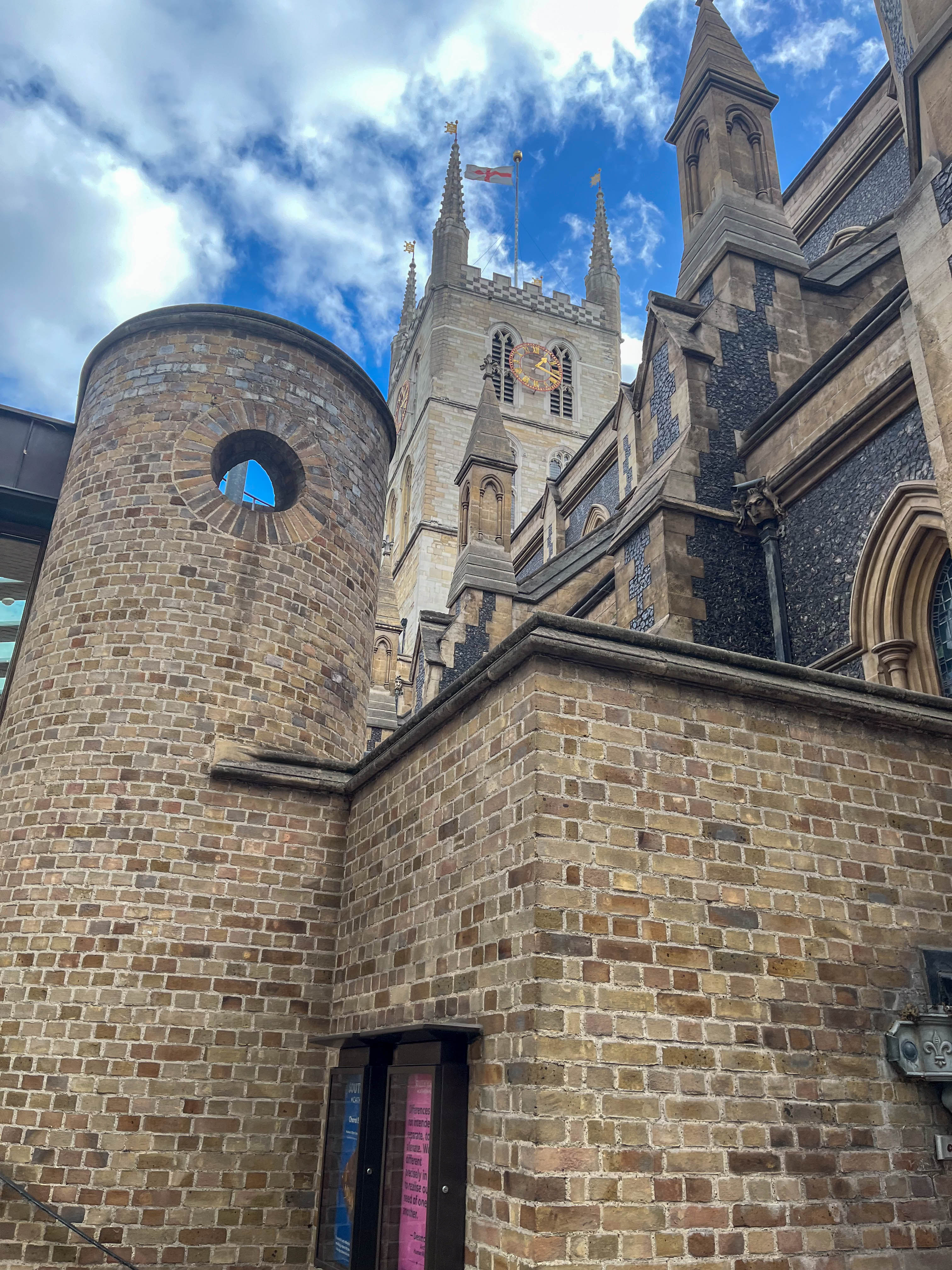
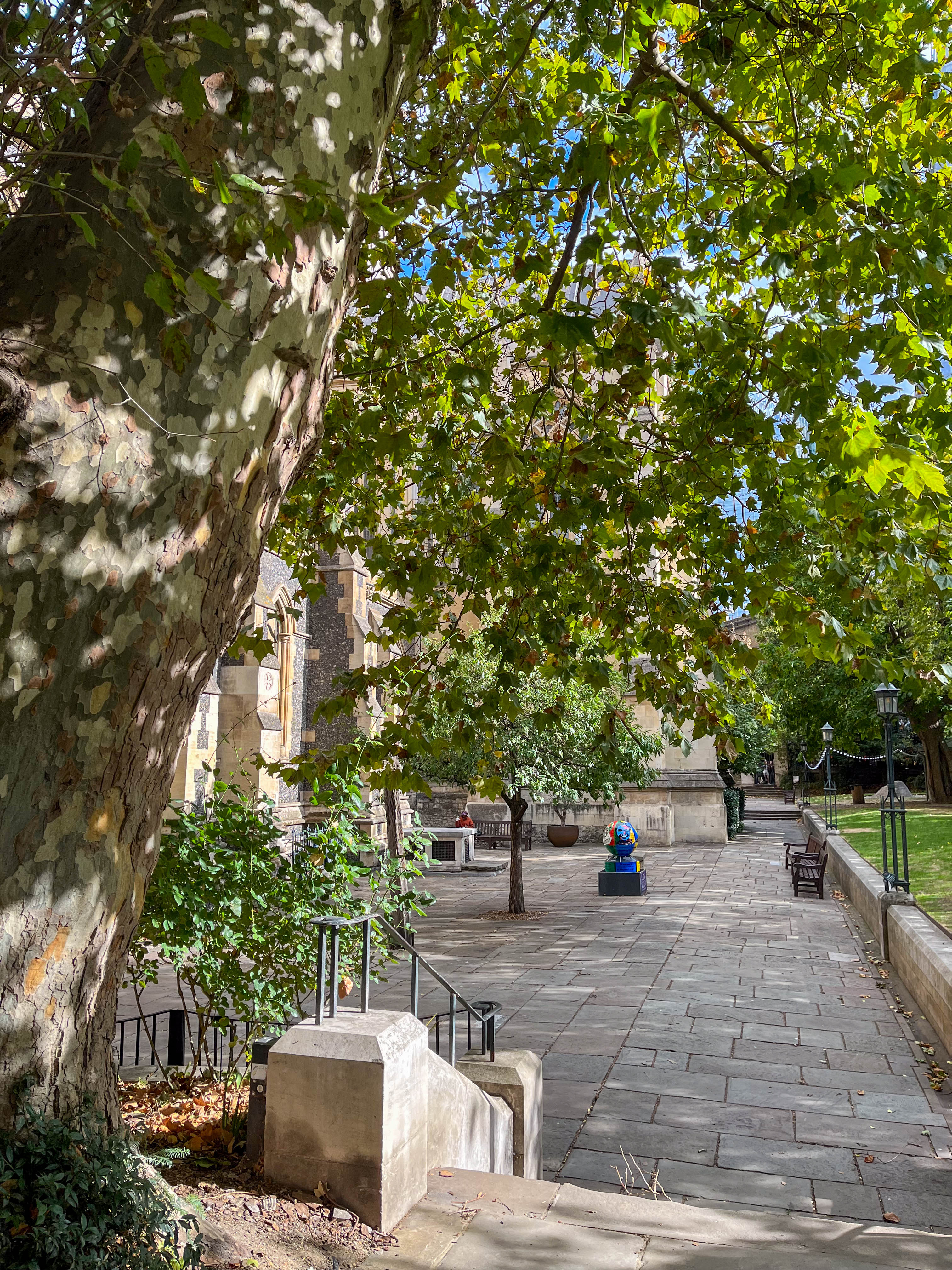
The first place I pass is Southwark Cathedral. It is thought that there has been a church on this site since the 7th century, but the first written reference to it was in the Doomsday book of 1086. It was re-founded as a priory in 1106 for Augustinian Canons under the control of the Bishop of Winchester. It was dedicated to St Mary Overie. After the dissolution of the monasteries in 1539 it became a parish church called St Saviours. In the 1820s there was a movement to demolish the church and rebuild it as a smaller building because it needed so much repair, but in the end it was refurbished and the proposal for a new church diocese covering South London and North Surrey in 1905 saw it elevated to Cathedral status. A modern extension to the north of the existing Cathedral was added in 2000.
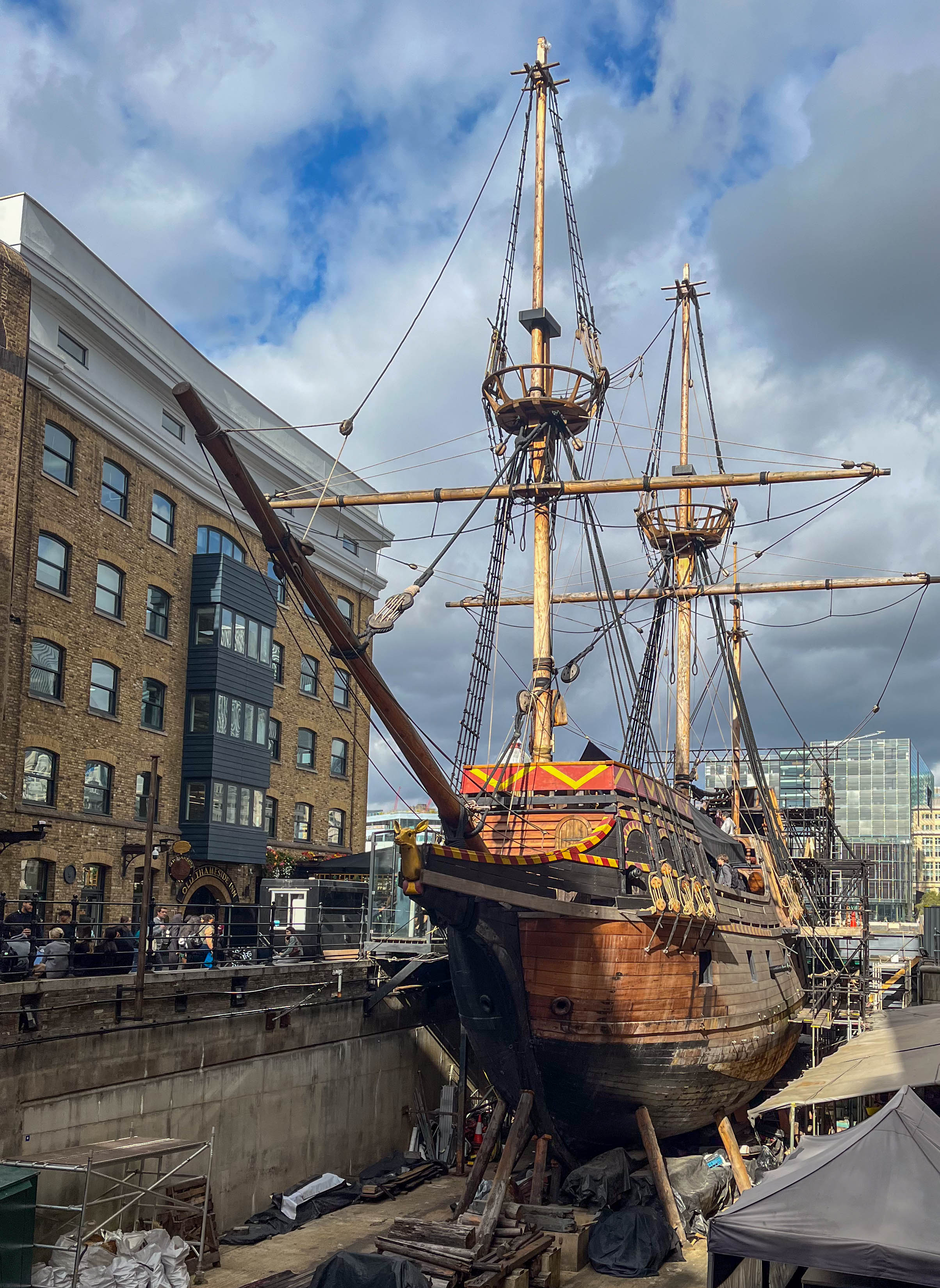
Just around the corner from the Cathedral is St Mary Ovarie Dock, originally a place where residents of the area could unload their ships. Today it is the home of a full size reconstruction of the Golden Hind., the ship of Sir Francis Drake. Built in 1973 it came to Southwark in 1996, and is now a museum and living history exhibit. The original Golden Hind was the ship in which Sir Francis Drake circumnavigated the world between 1577 and 1580. On its return it was put on display at Deptford Dockyard, where it remained until around 1650, when due to its poor condition it was broken up. Any remaining good timber was reused and there is a chair in the Bodleian Library in Oxford and a table in the Middle Temple in London, both of which were made from timber salvaged form the ship.
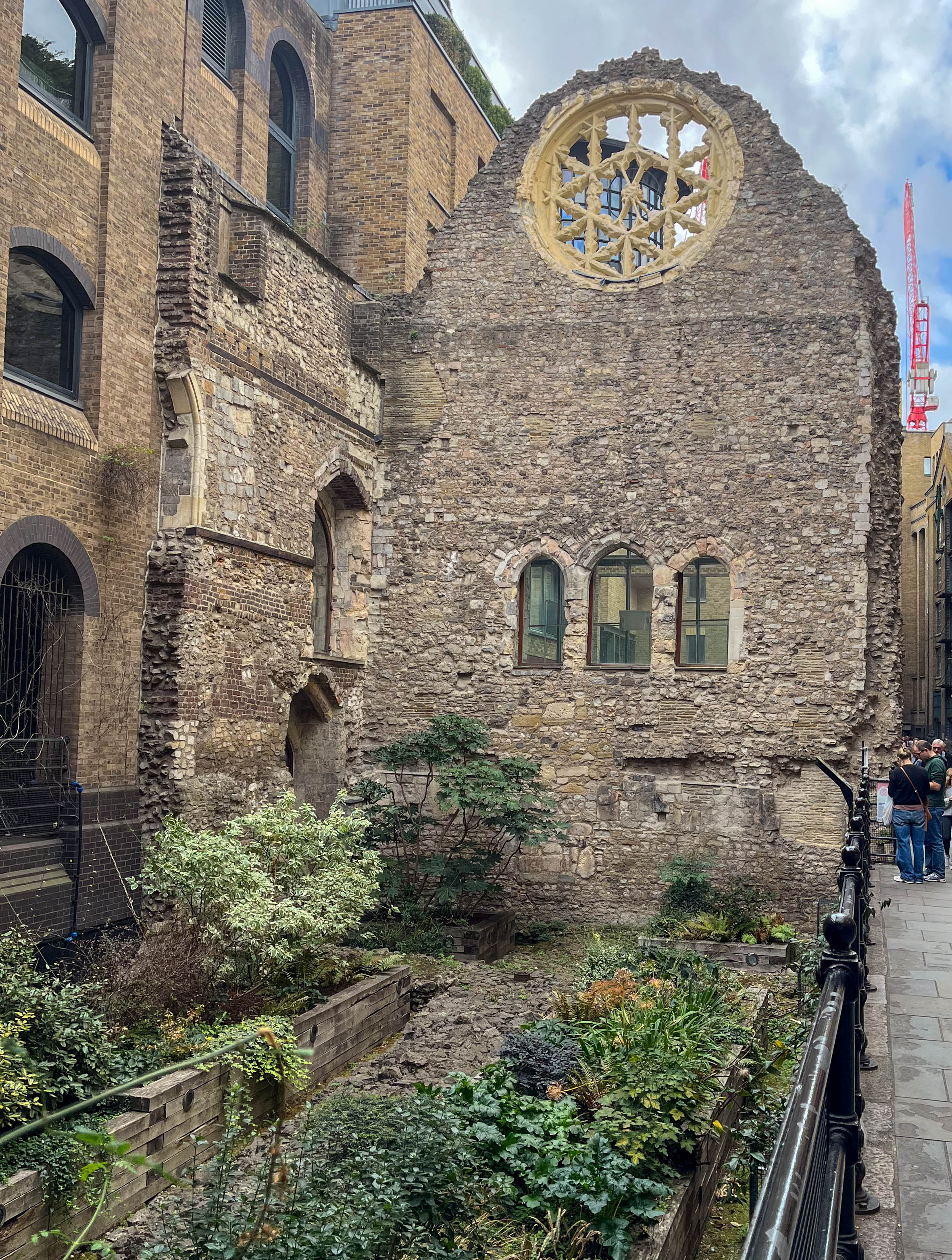
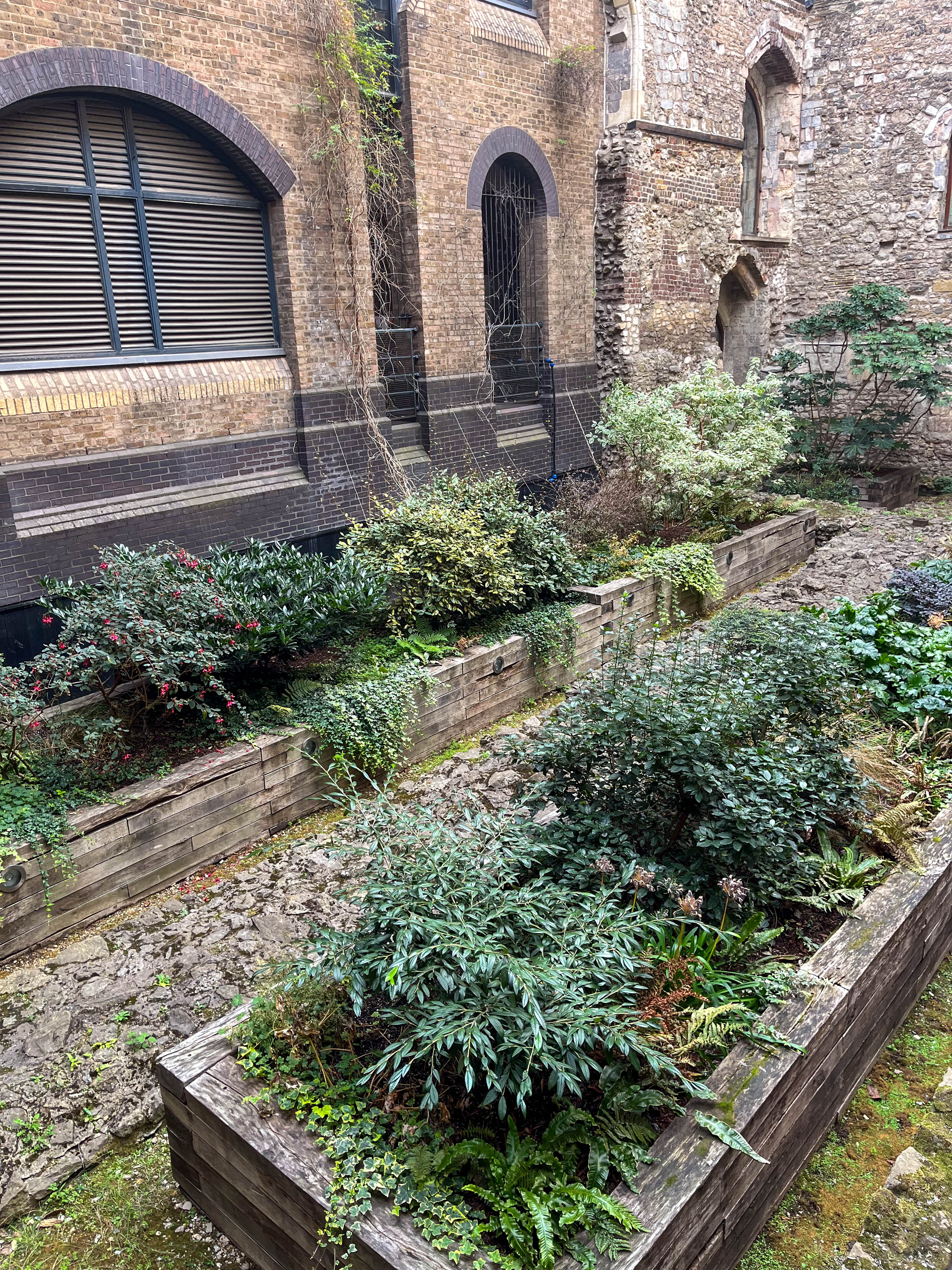
Southwark used to be part of the Diocese of Winchester and a little way further on from the Golden Hind are the remains of the Great Hall of the Bishops Palace. It was built in the 12th century and remodelled in the 17th Century. It went out of use at the beginning of the 18th century and was converted into tenements and warehouses for the docks. It was finally destroyed by fire in 1814. All that remains today is one wall with a rose window (probably from 14th century) and the bases of a wall.
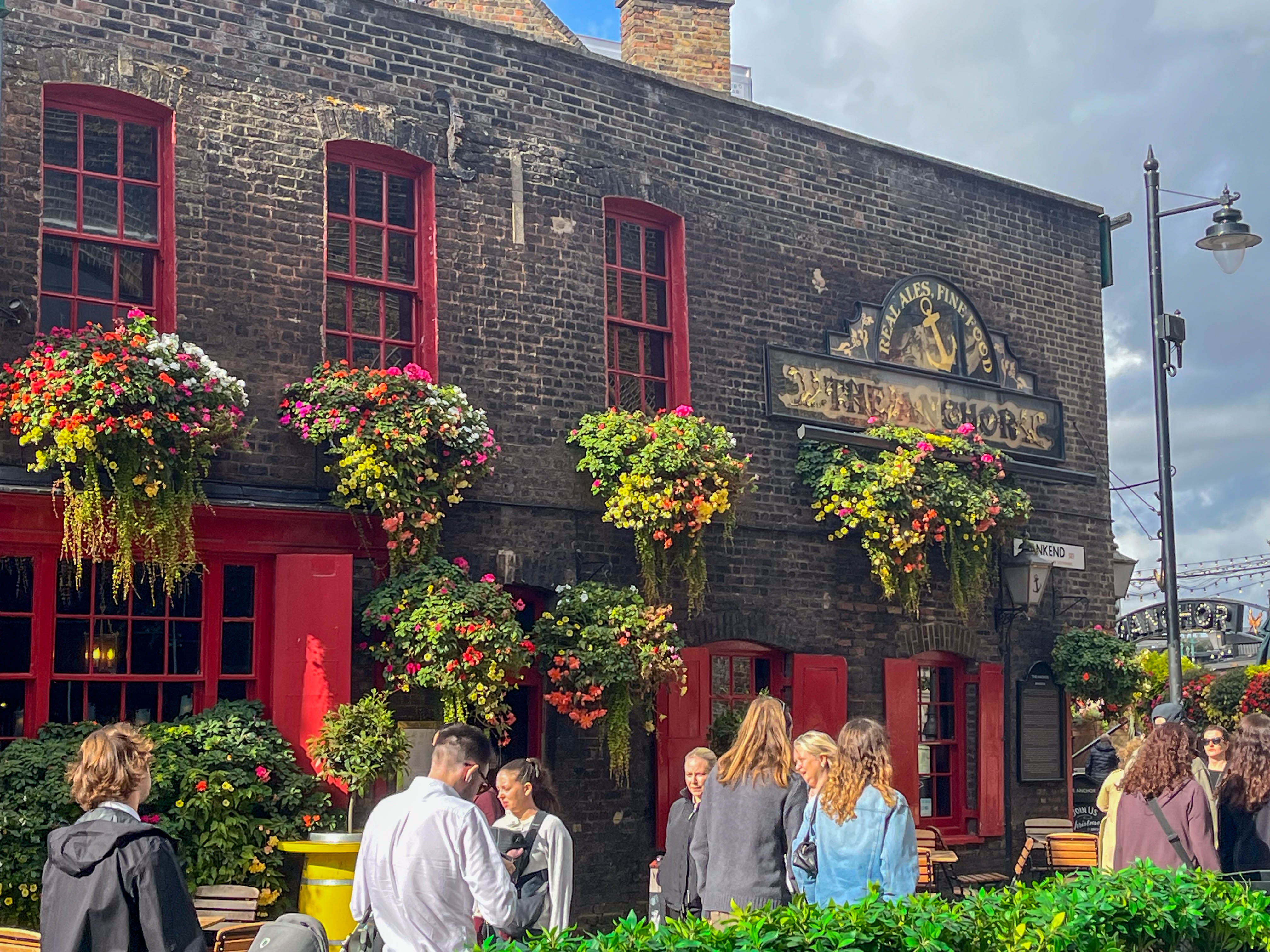
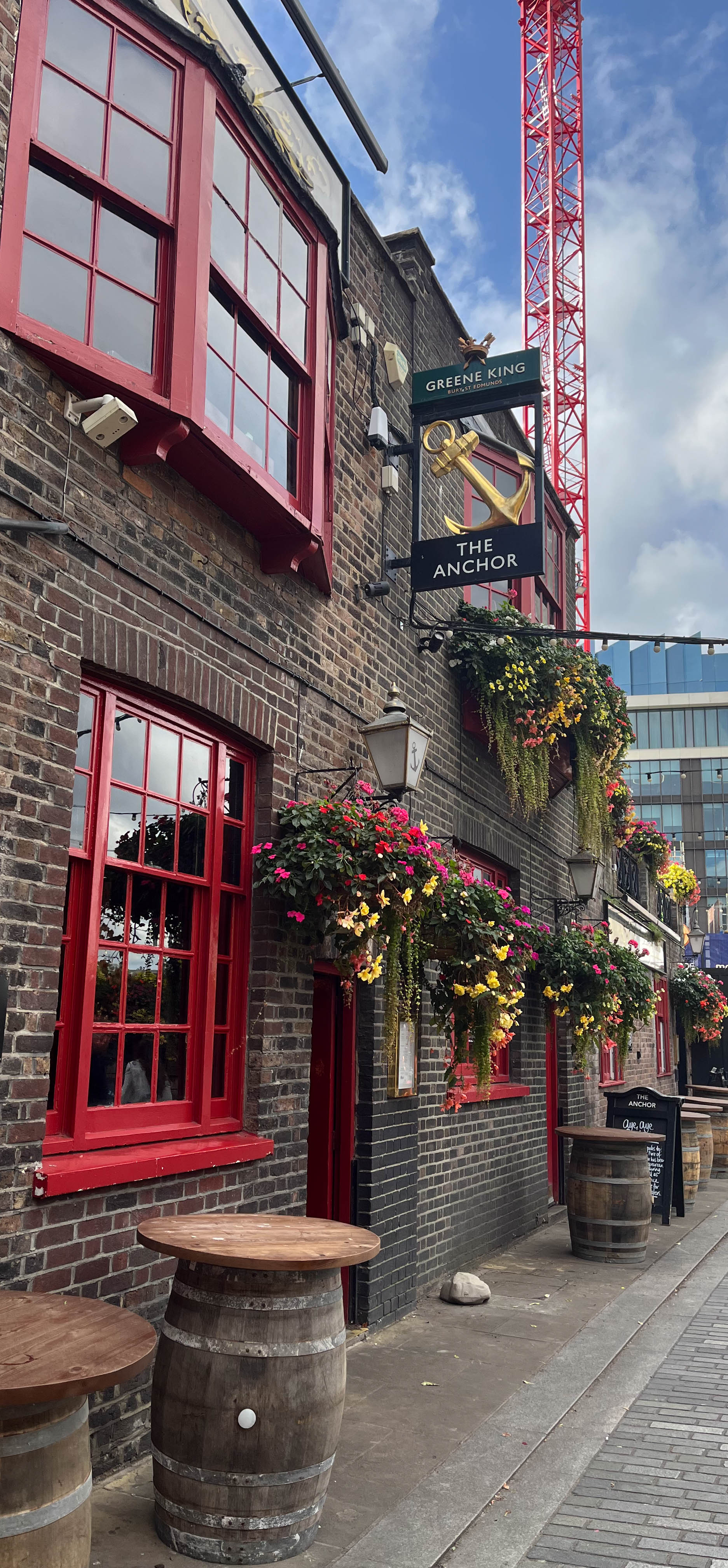
A little further on the walk and I come to the Anchor public house. It dates from 1616 and was an outlet for the Anchor Brewery which stood on a site just to the south. The original building appears to have been destroyed sometime in the 17th century although the story that it was destroyed in the great fire of London in 1666 is clearly wrong as the fire was only on the north bank of the river. Around 1767 – 1770 it was rebuilt and was again rebuilt around 1900.


